You were on track for the C-suite or the CEO role itself. Then the Board changed direction.
Few professional moments are as destabilizing for a senior executive. The role you had been preparing for sometimes quietly, sometimes explicitly suddenly disappears. Not because of performance, but because of governance shifts, strategic pivots, market pressure, or politics at the top.
At this level, the real risk isn’t the Board’s decision. It’s responding too quickly or too narrowly.
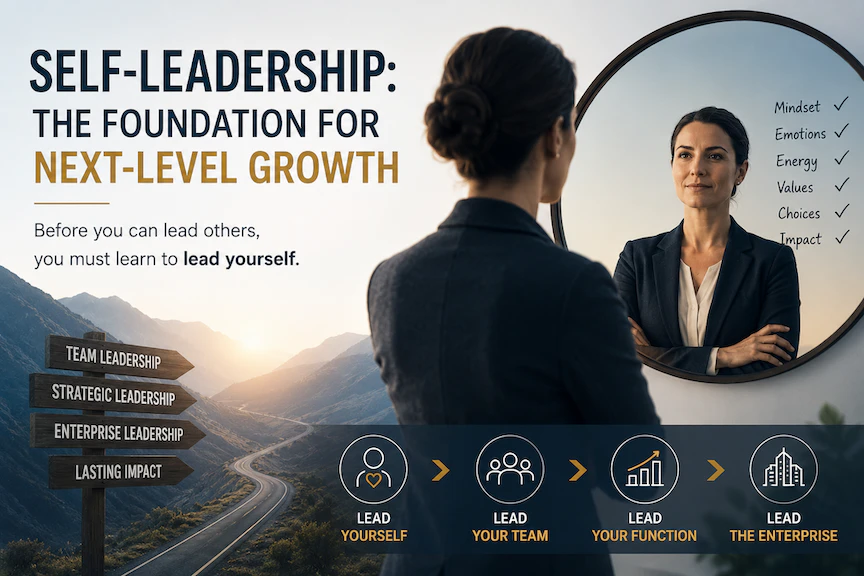
For executives navigating this moment, the default question is often “Should I stay or should I leave?” That binary framing almost always leads to reactive choices. A more effective approach requires strategic self-leadership: pausing long enough to assess options, risks, and identity before acting.
Below are six credible paths forward and the leadership questions that help executives choose wisely.
Stay and Intentionally Reframe the Role
Some leaders choose to remain with the organization, stepping into a redefined enterprise role such as President, COO, Vice Chair, or strategic integrator.
This path can work when:
- You are genuinely aligned with the organization’s future direction
- The board values your judgment and influence, not just your execution
- You can release the CEO title without diminishing your commitment or presence
The hidden risk is psychological rather than structural. Staying while privately grieving the top role can erode credibility, energy, and trust.
Executive reflection: Can I lead here with full conviction without the title I expected?
Stay Temporarily with a Clearly Defined Exit
Another option is a time-bound continuation: remaining for 6–18 months to ensure continuity, complete a transformation, or support a leadership transition.
This works best when:
- The timeline, scope, and narrative are explicit
- There is unfinished enterprise value you are uniquely positioned to deliver
- You want space to design your next chapter thoughtfully not reactively
The risk is drift. What begins as a bridge can quietly become a holding pattern.
Executive reflection: What guardrails will protect both my reputation and my momentum?
Transition into a Board or Advisory Role
Some executives step out of daily operations and into governance, advisory, or executive chair positions.
This path can be powerful when:
- Your institutional knowledge and external credibility are genuinely valued
- The role offers real influence, not symbolic presence
- You are ready to shift from operator to enterprise steward
The risk is ambiguity.
Executive reflection: Does this role meaningfully extend my influence or simply soften the landing?
Leave to Pursue Another CEO or Enterprise Leadership Role
For some leaders, the aspiration to be CEO remains central.
This path makes sense when:
- Your leadership brand is strong and well-positioned
- You can control the external narrative of your exit
- You leave deliberately, not emotionally
The risk is speed.
Executive reflection: What version of my leadership am I now ready to bring forward?
Build a Portfolio Career
Increasingly, senior leaders are choosing portfolio careers combining board service, advisory work, investing, teaching, mentoring, or coaching.
This approach works when:
- You seek flexibility, meaning, and breadth of impact
- Financial optionality exists
- Legacy and contribution matter as much as position
The risk is fragmentation.
Executive reflection: What do I want my leadership to stand for?
Step Away Deliberately
Sometimes the most strategic move is a pause.
This works best when:
- The decision landed as an emotional or identity-level shock
- Burnout or misalignment is present
- The pause is intentional and well-framed
The risk is disappearing without a narrative.
Executive reflection: Who am I when I’m no longer performing for the boardroom?
The Leadership Opportunity Hidden in the Disruption
When a C-suite role falls through, it is rarely just a career disruption. More often, it is an identity inflection point.
Handled with intention, this moment can become a turning point not a setback.
Ready to turn disruption into direction? Book a private strategy session with The Workplace Coach, LLC and leave with a clear path forward whether you stay, exit, or redesign what’s next.