If you’re like most leaders and professionals I coach, this year probably hasn’t unfolded quite the way you imagined. It may not even have been the year you would have willingly signed up for. And yet, here we are—at the close of this chapter, already looking toward the next, and the next after that.
So the real question becomes: how do we, as this year winds down, gather the inner and outer resources we need to face what’s coming? How do we meet the next set of challenges not just with grit and endurance, but with the energy, creativity, and sense of purpose that make the work meaningful in the first place?
There is no single road map for resilience that fits every situation or every season of life. But there are practices that reliably help you move in a healthier, more intentional direction. I think of them as signposts—practical reminders you can use for yourself and also offer to your team, colleagues, friends, and family. After all, our paths are interconnected, and the way we support others has a direct impact on our own ability to thrive.
Here are a few of those signposts:
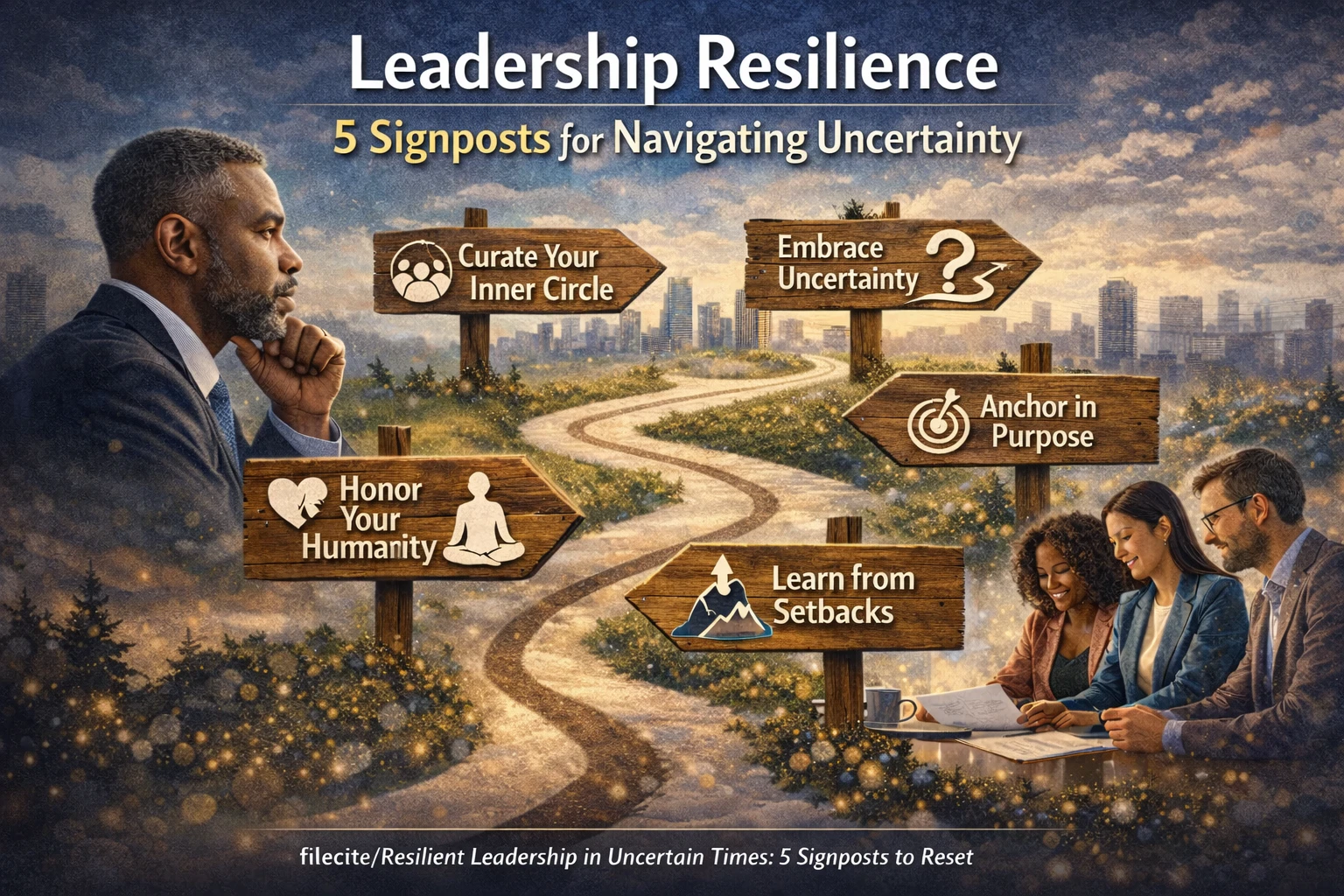
1. Curate your inner circle.
You don’t need a huge network to be resilient. What you do need is a small circle of trusted people who “get” you and are willing to offer honest and kind feedback. Those are the people who will tell you the truth, remind you of your strengths, and walk with you when things feel uncertain. That kind of support is pure gold.
2. Get more comfortable with uncertainty.
Resilience doesn’t mean having all the answers. It means being willing to move forward even when you don’t. Often, the most courageous thing you can do is simply identify the next right step and take it. Progress in uncertain times is usually step-by-step, not all-at-once.
3. Honor your humanity.
You are not a machine—you’re a human being. Rest, recovery, sleep, movement, and nutrition aren’t indulgences; they’re requirements. When you protect your energy and well-being, you expand your capacity to lead, to think clearly, and to show up as the best version of yourself. Recovery doesn’t compete with resilience; it builds it.
4. Anchor yourself in purpose.
When you stay connected to your “why,” it becomes easier to ride out the difficult days. Purpose gives context to the stress and sacrifice. It reminds you that the emails, meetings, and tough conversations are part of something bigger—a contribution that matters to you and to the people you serve.
5. Learn from setbacks instead of bracing against them.
Setbacks are not a sign that you’re failing; they’re evidence that you’re in the arena. They will happen. The key is to pause, reflect, and ask: What is this here to teach me? When you mine your challenges for insight, you grow stronger, wiser, and more agile going forward.
Of course, all of this is easier said than done. But that’s true of most things that genuinely move us forward. Resilience is less about being “tough” and more about practicing small, intentional behaviors that help you reset, realign, and re-engage—day after day.
At The Workplace Coach, we partner with leaders and organizations to build this kind of sustainable resilience—through executive coaching, leader-as-coach development, and practical tools that help people navigate real-world pressure with clarity and confidence. As you close out this year, I invite you to pause, take stock of how far you’ve already come, and choose one or two signposts to lean into more fully.
Here’s to a healthy, purposeful, and resilient new year—for you and for the people you lead.